Climate warning for archaeological sites
From the Chauvet cave to the Ile d’Yeu, prehistoric sites are under close surveillance. The hope: to understand how climate change threatens them. And prevent the disappearance of cave paintings.
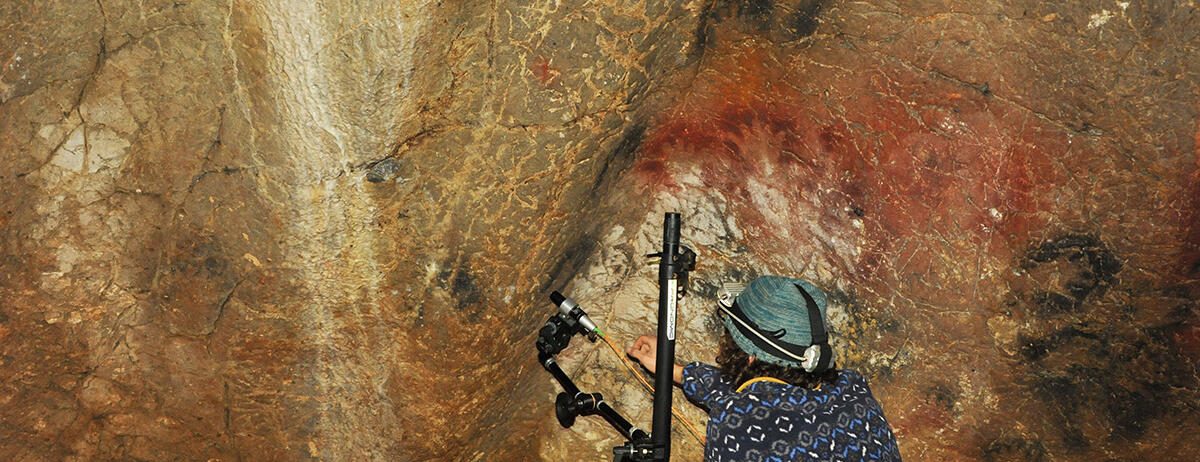
The Gargas cave, in the Aventignan commune in the Pyrenean foothills, is home to the most spectacular concentration of hands painted (around 27,000 years ago) by our Homo sapiens ancestors. Just over 230 negative hands adorn the rock faces, providing exceptional evidence of Gravettian culture in the Upper Paleolithic. Problem: every year, between January and April, a white spot forms on an ornate panel and seems to partially erase it. “It’s been reported for a long time, but fortunately always ends up disappearing, leaving the paintings intact,” reassures Bruno Lartiges , a specialist in the climatology of underground environments.
This phenomenon is a reminder, however, that the preservation of decorated caves depends on a fragile balance, which can be affected by climate change in particular. Hence the launch of the Decaclim research project, coordinated by Bruno Lartiges. “Based on a study of three sites – Gargas, the grotte aux Points d’Aiguèze (Gard) and the grotte de Villars (Périgord) – our aim is to understand the effects of climate change on these ecosystems, and to identify critical situations or tipping points that could lead to a rapid alteration of the natural heritage.
Read more on CNRS Le Journal.
Contact GET: Bruno Lartiges