
A study conducted by scientists from the Centre for Research on Biodiversity and the Environment (CRBE – CNRS/IRD/Toulouse INP/UT) and the Géosciences Environnement Toulouse laboratory (GET – CNRS/IRD/UT/CNES) reveals that the majority of microplastics present in drinking water escape current detection due to their small size (< 20 µm). Using an innovative approach based on Raman microspectroscopy, the scientists call for a revision of European standards to include this fraction, which represents a higher risk of integration into the human body. Published in the journal Plos Water, this research highlights the importance of better regulation of microplastics in drinking water.
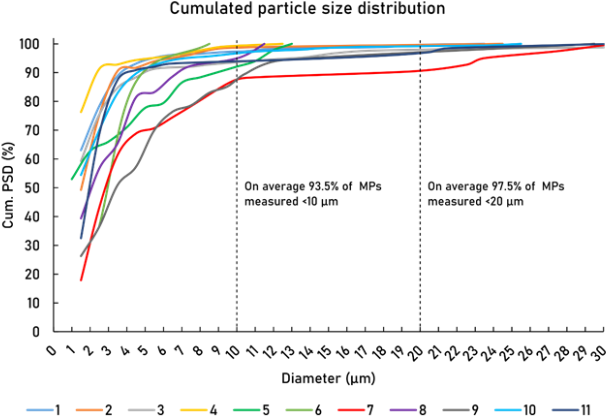
Microplastics, these plastic fragments invisible to the naked eye, are omnipresent in our environment and are also found in drinking water, whether bottled or tap. A new study, led by the Centre for Research on Biodiversity and the Environment (CRBE, CNRS/UT/IRD/Toulouse INP) and the Géosciences Environnement Toulouse laboratory (GET, CNRS/IRD/UT/CNES), reveals that 98% of microplastics present in drinking water measure less than 20 µm. However, this critical size is not included in the detection methodology of European Directive 2020/2184, which could significantly underestimate their presence and their health risks.
Read more on the website of the University of Toulouse (in French)
Contact GET: Jeroen Sonke