
Central African Forest: 600,000 Years of Human History Uncovered Beneath the Canopy
Archaeological excavations conducted in the Congo Basin show that these territories have been inhabited, traversed, and transformed for hundreds of thousands of years—long before Homo sapiens’ great exodus from Africa. Tools, settlements, metallurgy, and crop cultivation reveal mobile, interconnected societies capable of adapting their practices to changing environments. This research also calls for a rethinking of current tropical forest management.
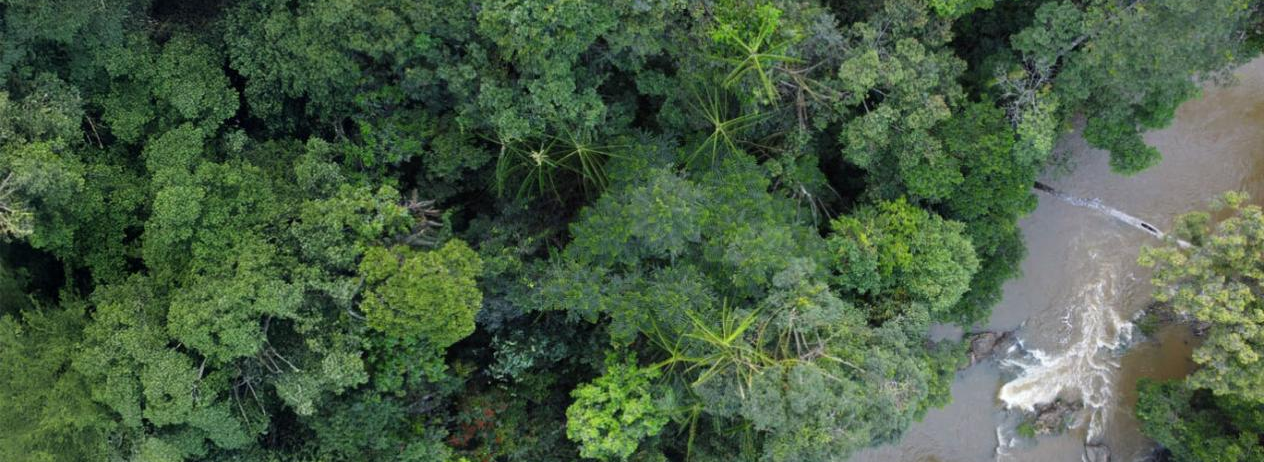
Long described as a vast, dense, and impenetrable expanse of greenery, almost outside the realm of human history, the Congo Basin forest was until now viewed as a natural sanctuary, preserved from any lasting influence of human societies. But this deeply ingrained perception is now being widely challenged: Archaeology and environmental sciences reveal, on the contrary, an ancient, continuous, and formative human presence.
Beneath the canopy, more than 600,000 years of human occupation are gradually coming to light. Stone tools, remains of settlements, pottery, plant remains, and evidence of metalworking paint a picture far more complex than what was imagined even recently. Far from being an empty space, the forest appears as a territory that has been inhabited, traversed, and transformed over the long term.
© IRD – Thomas Couvreur
Read more on the IRD Le Mag’ website.
Contact GET: Jean-Jacques Braun