What ontological plurality does to scientists scientific result?
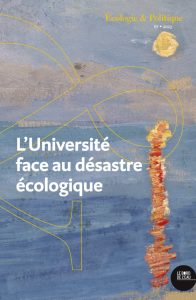
Discover the new article in which Laure Laffont participated in L’université face au désastre écologique, Ecologie & Politique, N°67.
This article illustrates the various ways in which researchers have appropriated the work of Philippe Descola, which questions the division between nature and culture. This dividing line is also said to structure the sciences. The question is, then, what does the appropriation of this line of questioning mean for scientists? What are the consequences for their work? What are the individual and collective (de)construction processes used by researchers? Our aim here is to explore ‘what acceptance of ontological plurality does to scientists’ through interviews with a number of researchers in Toulouse. Ontological plurality refers to the idea that our way of understanding the world is not unique but diverse, instituted by the societies in which we live. This hypothesis, set out by Philippe Descola in Beyond Nature and Culture, leads him to identify four ontologies around the world: naturalism, animism, totemism and analogism. The question, then, is what taking seriously, or even accepting, the existence of several ways of being in the world implies for the scientist and his activity, insofar as science emerges in the bosom of a specific ontology, ‘naturalism’, and is constitutive of it.