Assessing air quality with plants: yes, but for which elements?
Epiphytic plants, which absorb their nutrients exclusively from the air, are good indicators of the chemical composition of atmospheric particles and are often used in the literature as diagnostic tools. Their low cost and drought resistance mean they can be deployed over large areas. A team of researchers from several Toulouse laboratories has demonstrated that these plants do accumulate contaminants (Cr, As, Pb…), but not always nutrients (Cu, Zn, Mn, K, P…). These results underline the importance of interpreting biomonitoring results with caution, and highlight the limited knowledge in the literature concerning leaf-particle interactions.
Monitoring air pollution by atmospheric particulate matter (PM) is a tedious task, requiring sophisticated, electrically-powered samplers and regular maintenance. For several years now, “biomonitoring” strategies have been developed to optimize air quality assessment. Their low cost and resistance to drought mean they can be deployed over large areas. Among them, epiphytic plants are frequently used, as they feed on nutrients (and water) present in the air. Their low cost and drought resistance mean they can be deployed over large areas. Among them, epiphytic plants are frequently used, as they feed on nutrients (and water) present in the air. However, evaluation of the effectiveness of using these plants for air quality monitoring remains limited, particularly as regards the inorganic elements present in PM that can be properly “recorded” using these epiphytic plants.
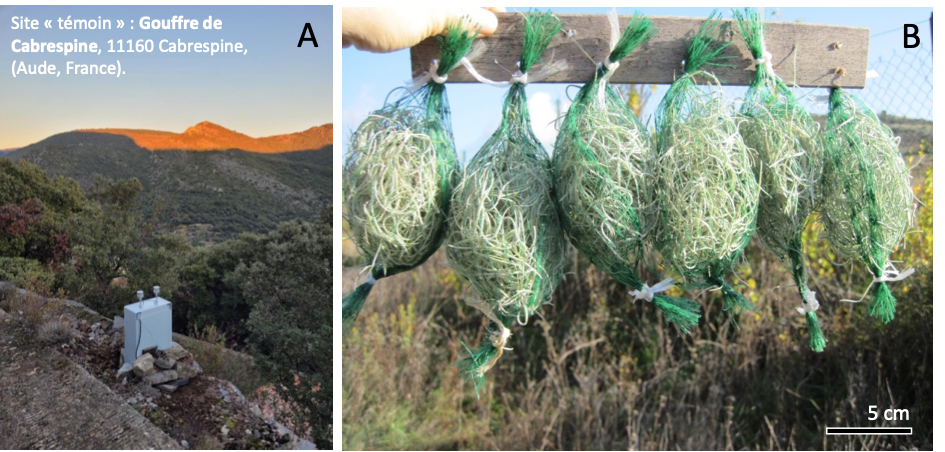
A team of researchers from several Toulouse laboratories investigated whether Tillandsia usneoides, a commonly used epiphytic plant species, could accurately characterize particulate contamination at four sites in a former French mining district. Comparisons were made over one year between (i) PM10 samplers, capturing particles with an aerodynamic diameter < 10 µm, and (ii) Tillandsia usneoides, capable of accumulating all deposited particle sizes. The results showed that 14 of the 27 elements analyzed in parallel in PM10 and Tillandsia usneoides showed positive and significant correlations. This indicates consistency between the two measurement techniques for these elements, which include metals and metalloids considered priority pollutants by the US Environmental Protection Agency, such as chromium, lead, arsenic or antimony. However, plant (micro)nutrients or elements chemically similar to them (sodium, rubidium, strontium) showed no significant correlation.
These results underline the importance of interpreting biomonitoring results with caution, and highlight the limited knowledge in the literature concerning leaf-particle interactions.
Contacts GET: Aude Calas, Eva Schreck, Astrid Avellan