Sargassum and fiddler crabs boost carbon storage in mangroves

Against all expectations, sargassum promotes carbon storage in mangrove soils.

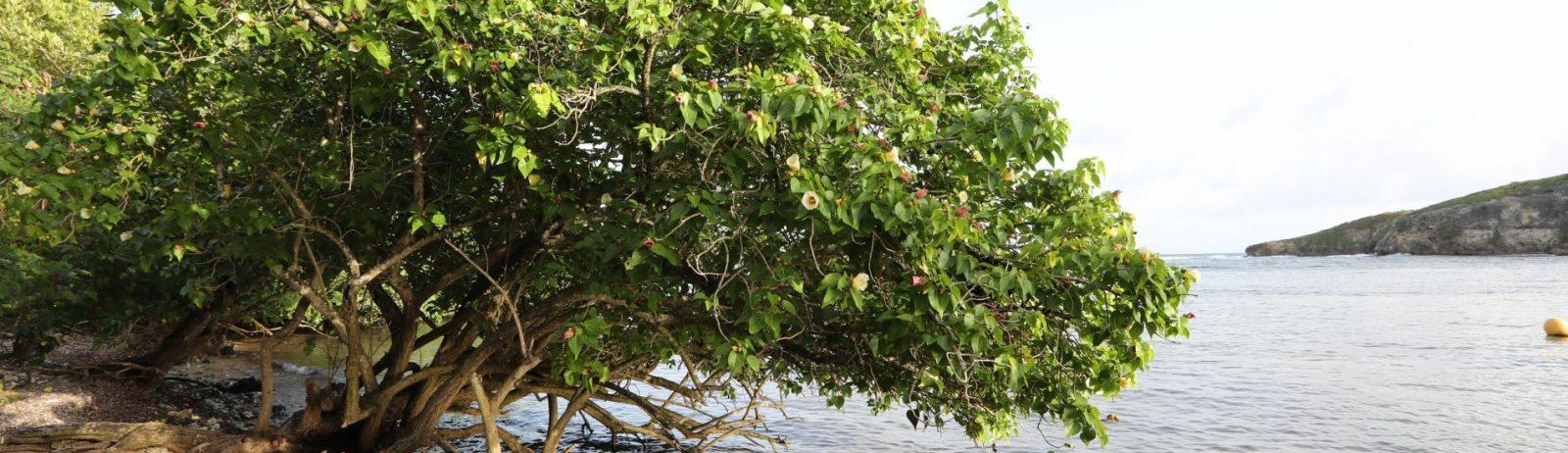
The Caribbean coasts and mangroves are regularly buried under tons of stranded sargassum. Although the harmful effects of the gases released by these algae as they decompose, such as hydrogen sulphide, are well known, their impact on ecosystems is still the subject of in-depth research. Sometimes with surprising results! This is the case of a study carried out by IRD scientists and their partners, who were interested in the effects of sargassum strandings on the capacity of Guadeloupean mangroves to store carbon. While the researchers thought that decomposing algae would promote the degradation of soil carbon in mangroves, they discovered that the latter, on the contrary, contributed to the storage of blue carbon: this is what we call “the negative priming effect”.

Read more in the IRD Le Mag‘ magazine (in French).

GET Contact: Frédéric Guérin

Sources :

Mathias Chynel, Gwenaël Abril, Mélissa Narayaninsamy, Loris Deirmendjian, Frédéric Guérin, Charlotte Dromard & Tarik Meziane, Sargassum beaching on mangrove sediments shifts microbial and crab metabolisms and enhances blue carbon storage, Limnology and Oceanography, 69(12), 2941-2953. https://doi.org/10.1002/lno.12725

More news

10,000 Years of Food Inequality

An international team of researchers (Inrap, CNRS, Simon Fraser University) has published an article in the journal PNAS titled “Dietary Inequality Marker Reveals 10,000 Years of Gender and Cultural Disparity […]

Deciphering ancient oceans using pyrite and iron isotopes

Iron isotopes in pyrite are frequently used to better understand environmental conditions throughout our planet’s history, going back to sedimentary archives dating back billions of years. A team of researchers […]

A temperature jump of 400°C at a depth of 2 km—it’s possible in Krafla to cook a steak!

This study explains the heat transfer between a magma reservoir and the surrounding rock in the high-enthalpy geothermal exploration area of Krafla, Iceland. Thermomechanical numerical models explain the sudden jump […]

Search