The carbon footprint of research infrastructures challenges the environmental responsibility of INSU laboratoires

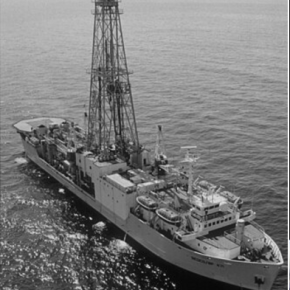
To limit global warming to less than 2°C, it is necessary to radically reduce current greenhouse gas (GHG) emissions. Scientists should also participate in this effort as part of their professional activity, particularly specialists in Earth and environmental sciences, in order to preserve their credibility and set an example. This requires detailed estimates of the GHG emissions associated with the activities of scientists, here measured by the carbon footprint of laboratories. In particular, the footprint of large international research infrastructures (satellites, scientific vessels, etc.) had been little studied until now.

Read more on the CNRS Terre & Univers website (in French)

Contact GET: Odin Marc

Sources :

Marc O, Barret M, Biancamaria S, Dassas K, Firmin A, et al. (2024) Comprehensive carbon footprint of Earth, environmental and space science laboratories: Implications for sustainable scientific practice. PLOS Sustainability and Transformation 3(10): e0000135.

More news

Central African Forest: 600,000 Years of Human History Uncovered Beneath the Canopy

Archaeological excavations conducted in the Congo Basin show that these territories have been inhabited, traversed, and transformed for hundreds of thousands of years—long before Homo sapiens’ great exodus from Africa. […]

10,000 Years of Food Inequality

An international team of researchers (Inrap, CNRS, Simon Fraser University) has published an article in the journal PNAS titled “Dietary Inequality Marker Reveals 10,000 Years of Gender and Cultural Disparity […]

Deciphering ancient oceans using pyrite and iron isotopes

Iron isotopes in pyrite are frequently used to better understand environmental conditions throughout our planet’s history, going back to sedimentary archives dating back billions of years. A team of researchers […]

Search