
Atmospheric mercury: a decade of observations on Amsterdam Island

The recent publication of a data paper by a research team including scientists from CNRS Terre & Univers highlights a unique series of measurements of atmospheric mercury on Amsterdam Island, one of the most isolated places on the planet, and one of the five districts of the French Southern and Antarctic Lands. These data support decision-making and the assessment of the Minamata Convention, an international treaty that since 2017 has aimed to protect human health and the environment from the harmful effects of this metal.
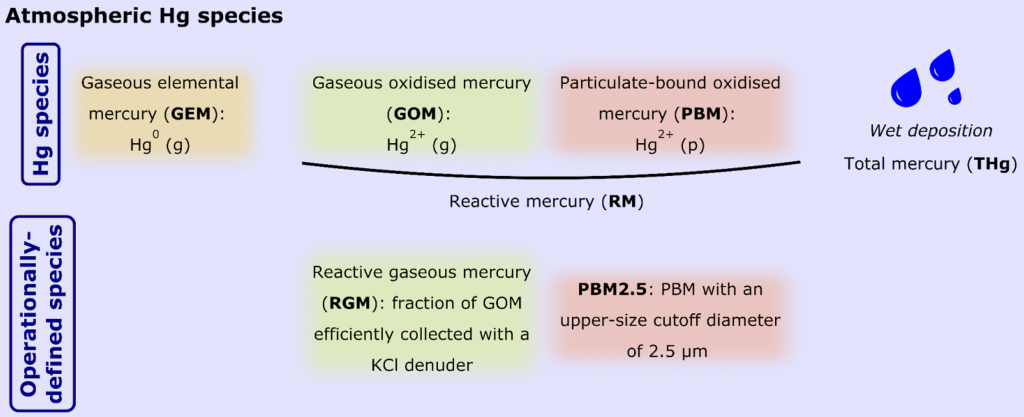
Overview of atmospheric mercury species monitored on the subtropical island of Amsterdam since 2012. Gaseous elemental mercury (GEM) is the atmospheric species currently monitored in parallel to OPAR-Maido since 2017. Figure taken from Magand et al, 2023.

Read more on the CNRS Terre & Univers website.

GET contacts: Jeroen Sonke et Laure Laffont

Sources :

Magand, O., Angot, H., Bertrand, Y., Sonke, J.E., Laffont, L., Duperray, S., Collignon, L., Boulanger, D., Dommergue, A., 2023. Over a decade of atmospheric mercury monitoring at Amsterdam island in the French southern and Antarctic Lands. Sci Data 10, 836 (2023). https://doi.org/10.1038/s41597-023-02740-9

More news

Ancient guano reveals how climate change could shape the future of seabird populations

The history of seabird population sizes prior to the Anthropocene (the modern era) remains largely unknown. This gap limits our understanding of current phenomena and our ability to predict the […]

Central African Forest: 600,000 Years of Human History Uncovered Beneath the Canopy

Archaeological excavations conducted in the Congo Basin show that these territories have been inhabited, traversed, and transformed for hundreds of thousands of years—long before Homo sapiens’ great exodus from Africa. […]

10,000 Years of Food Inequality

An international team of researchers (Inrap, CNRS, Simon Fraser University) has published an article in the journal PNAS titled “Dietary Inequality Marker Reveals 10,000 Years of Gender and Cultural Disparity […]

Search