In Siberia, seasonal thawing of permafrost will increase by more than 60% by 2100
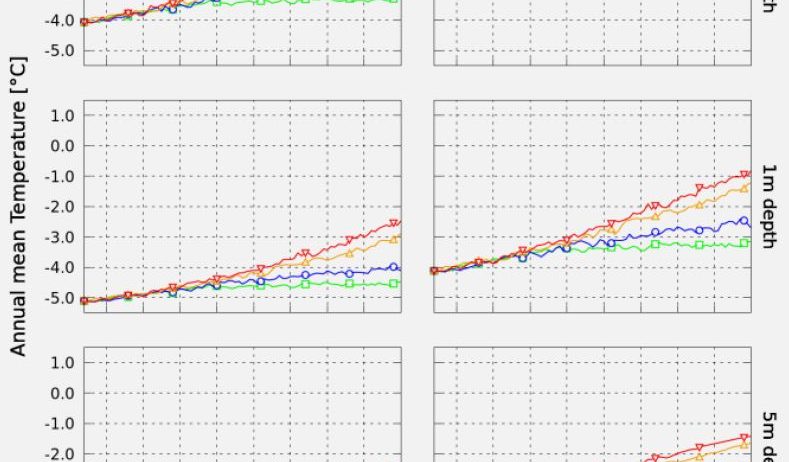
The permafrost of central Siberia is showing signs of significant warming. An international study, led by Laurent Orgogozo, lecturer at the University of Toulouse in the Toulouse Geosciences Environment Laboratory (GET-OMP – CNES/CNRS/IRD/UT), simulated the consequences of global warming on permafrost. It will undergo significant thawing by 2100 regardless of the climate change scenario considered. These results were published in the December issue of The Cryosphere.
Permafrost (sometimes also called permafrost) is a ground that is frozen deep down throughout the year, covering a quarter of the land in the northern hemisphere. The presence of permafrost strongly affects water flows, soil stability and environmental conditions, with important consequences for ecosystems and human activities in cold regions. Boreal forests, for example, form one of the largest biomes on Earth and 80% of them are located on permafrost. Due to the complexity of biophysical processes, quantifying permafrost change requires high-resolution models.
Read more on the website of the University of Toulouse (in French).
Contact GET: Laurent Orgogozo