Atmospheric mercury: a decade of observations on Amsterdam Island

The recent publication of a data paper by a research team including scientists from CNRS Terre & Univers highlights a unique series of measurements of atmospheric mercury on Amsterdam Island, one of the most isolated places on the planet, and one of the five districts of the French Southern and Antarctic Lands. These data support decision-making and the assessment of the Minamata Convention, an international treaty that since 2017 has aimed to protect human health and the environment from the harmful effects of this metal.
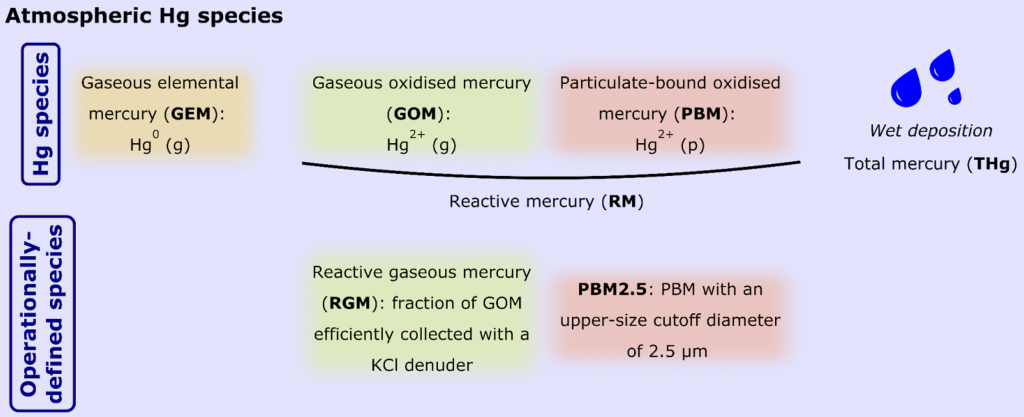
Overview of atmospheric mercury species monitored on the subtropical island of Amsterdam since 2012. Gaseous elemental mercury (GEM) is the atmospheric species currently monitored in parallel to OPAR-Maido since 2017. Figure taken from Magand et al, 2023.

Read more on the CNRS Terre & Univers website.

GET contacts: Jeroen Sonke et Laure Laffont

Sources :

Magand, O., Angot, H., Bertrand, Y., Sonke, J.E., Laffont, L., Duperray, S., Collignon, L., Boulanger, D., Dommergue, A., 2023. Over a decade of atmospheric mercury monitoring at Amsterdam island in the French southern and Antarctic Lands. Sci Data 10, 836 (2023). https://doi.org/10.1038/s41597-023-02740-9

More news

MACIV nodes: an exceptional seismological network on the volcanoes of the Massif Central

As part of the MACIV project, funded by the French National Research Agency (ANR), a team of scientists deployed the largest mobile seismological network ever installed by a university team […]

Laterites, archives of past climate and keys to present development

The scarlet lands covering the plains and plateaus of West Africa are much more than just a typical tropical landscape. These laterites bear witness to a geological history spanning tens […]

Unprecedented mineral and organic compounds discovered in Mars’ Jezero Crater

The Perseverance rover has uncovered sedimentary rocks containing minerals and organic matter organized into structures never before seen on Mars, opening up new perspectives on the Red Planet’s past habitability. […]

Search