
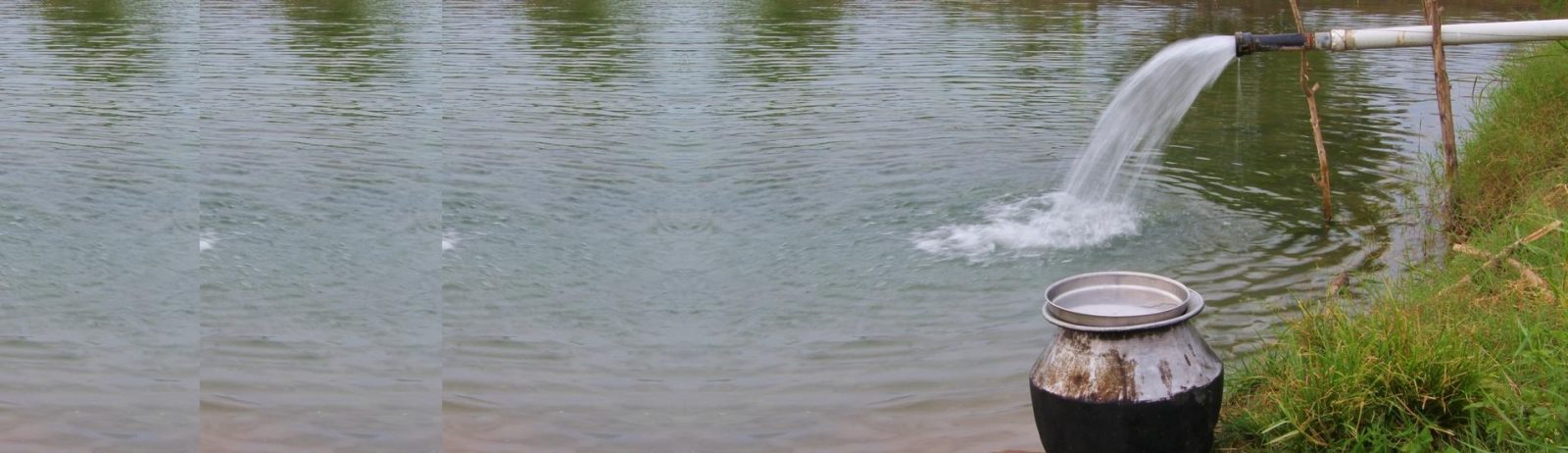
In India, simple management of rainwater and a local lake helps to compensate for polluted groundwater sources for drinking water.
How can drinking water be supplied to populations in a region with polluted groundwater? This is a pressing issue in arid and semi-arid areas of India, where overexploited aquifers are contaminated with fluoride and uranium, if not with elements from agricultural inputs. Scientists from IRD and their colleagues at the Indian Institute of Science in Bangalore have been working on this issue in the Chikkaballapura district, in eastern Karnataka. As the groundwater there had become unfit for consumption, the aim was to mobilize surface resources. Since the area has only a few small ephemeral streams, they assessed the capacity to collect rainwater from roofs and nearby hillside reservoirs as an alternative source of drinking water. The average annual rainfall in this area is 700 mm, and the amount of rainwater that can be collected from existing roofs is sufficient to meet drinking water needs, but not for all domestic uses.However, these can be covered by drawing water from a quasi-permanent lake located in the upper parts of the micro-watershed, which stores 300,000 m3 of water, requiring only routine filtration and chlorination.
This study proves that fairly simple sustainable water management practices can replace contaminated groundwater for human consumption.
Read more on the IRD le Mag’ website (news written by Olivier Blot, IRD le Mag’)
Contact GET: Jean Riotte